
Did Jesus Rise from the Dead? A Clear Look at the Evidence
The resurrection of Jesus Christ stands at the centre of Christian faith. It is more than a symbolic story or a theological idea—it is presented as a real historical event with real historical consequences. This article explores the key evidence supporting the resurrection and addresses why it remains one of the most compelling claims in ancient history.

Objection 1 - Jesus was a mythological figure
Historical Foundations You Can’t Ignore
Myth doesn’t fit the evidence. Jesus is referenced by multiple independent ancient sources—including hostile Roman and Jewish writers—who confirm he lived, taught, gathered followers, and was executed under Pontius Pilate. Early Christian creeds appear within years of his death, far too early for myth to develop. No serious historian today argues Jesus never existed; the “myth theory” survives only online, not in scholarship.

Objection 2 Jesus was just a man
The problem is that Jesus didn’t act like “just a man.” He claimed divine authority, forgave sins, accepted worship, fulfilled ancient prophecies, and performed works his followers—and even his enemies—believed were supernatural. His earliest disciples, all devout Jews, proclaimed him Lord within years of his death, even when it cost them everything. Ordinary men don’t reshape history, inspire worship, or rise at the centre of a movement that explodes across the ancient world unless something far greater is going on.
Objection 3 - Jesus's followers just made it all up
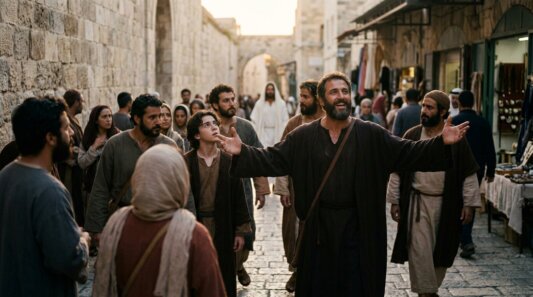
That theory collapses under the weight of history. The disciples gained no power, wealth, or safety by preaching Jesus—only persecution, imprisonment, and death. People may lie for advantage, but not for a message that costs them everything. Their testimony is also early, consistent, and public, proclaimed in the very city where Jesus was executed—where it could be disproven instantly if false. Movements built on deliberate lies don’t survive the first generation; this one reshaped the world
Objection 4 - The witnesses were unreliable
Calling the witnesses “unreliable” doesn’t match what we actually know about them. These were people who reported public events, in public places, to audiences who could challenge them immediately if they were exaggerating or inventing details. Their accounts come from multiple independent sources that overlap on the core events while retaining their own perspectives—exactly what you’d expect from genuine eyewitness testimony, not a coordinated fabrication.
They also include embarrassing details about their own failures, doubts, and misunderstandings. Unreliable or deceptive witnesses don’t write themselves in as cowards, skeptics, or slow learners. And their message cost them dearly: persecution, imprisonment, and in many cases death. People may be mistaken about trivial things, but they don’t willingly suffer for claims they know are false.
If these witnesses were truly unreliable, the movement would have collapsed under scrutiny in the first generation. Instead, it spread across the ancient world because their testimony held up.
Objection 5 The resurrection is not important
Saying the resurrection isn’t important misunderstands the entire shape of the Christian message. From the very beginning, the resurrection wasn’t an optional extra or a poetic metaphor—it was the centre of the faith. The earliest Christian preaching didn’t start with Jesus’s teachings, parables, or ethics; it started with a claim about an event: that God had raised Jesus from the dead. Everything else flowed from that.
Without the resurrection, Jesus becomes just another moral teacher whose life ended in failure. His claims about authority, forgiveness, and the kingdom of God collapse. His death becomes a tragedy rather than a turning point. The disciples would have had no reason to regroup, no message to proclaim, and no courage to face persecution. The entire movement would have died with him, as so many others did in the first century.
But with the resurrection, everything changes. It validates Jesus’s identity, confirms his mission, and launches a community convinced that death itself had been defeated. It explains why frightened followers became bold witnesses, why sceptics like James and Paul were transformed, and why the message exploded across the ancient world. The resurrection isn’t a footnote—it’s the engine. Remove it, and Christianity collapses. Keep it, and the whole story makes sense.
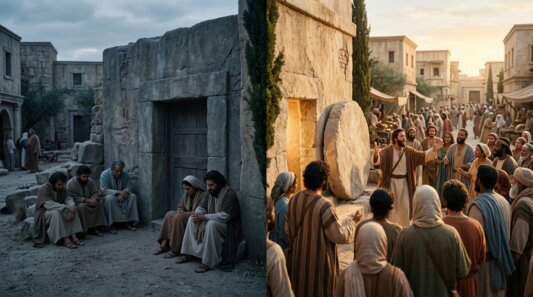
Conclusion
Dismissing the resurrection as unimportant misses the heart of the Christian claim. The resurrection isn’t a decorative extra—it’s the hinge on which the entire story turns. It’s the moment that transforms Jesus from a tragic figure into the one who conquers death, validates his identity, and launches a movement that reshaped history. Without it, Christianity collapses into moral advice; with it, it becomes a message of hope, justice, and renewal for the whole world.
The resurrection is important because it answers the deepest human questions:
Is there meaning? Is there justice? Is there hope beyond death?
The earliest Christians staked everything on their conviction that the answer was yes—not because of a philosophy, but because of an event they believed they had witnessed.
That’s why the resurrection matters. It’s not just a doctrine; it’s the foundation of Christian faith, the spark of Christian mission, and the reason the story didn’t end at a tomb.