Is the Bible True?
For thousands of years, the Bible has shaped civilisations, influenced laws, inspired great works of art, and transformed countless lives. Yet one question continues to be asked by believers and sceptics alike:
Can the Bible be trusted?
Unlike many ancient religious texts, the Bible makes hundreds of historical claims about real people, real places, real kingdoms, and real events. Because of this, its claims can be tested against archaeology, ancient inscriptions, contemporary writings, and historical investigation.
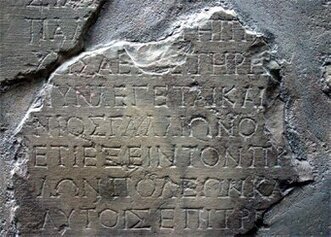
Over the last two centuries, archaeologists have uncovered remarkable discoveries that illuminate the world of the Bible. Inscriptions have confirmed the existence of figures such as Pontius Pilate and Gallio, while excavations across Israel, Jordan, Egypt, Greece, and Turkey continue to reveal details of the cultures and locations described in Scripture. The famous Pilate Stone from Caesarea names Pontius Pilate as Prefect of Judea, while the Gallio Inscription provides one of the most important chronological anchors for dating the ministry of the Apostle Paul. [en.wikipedia.org], [uasvbible.org], [en.wikipedia.org]
But archaeology is only part of the story.
The Bible's extraordinary manuscript preservation, its consistency across centuries of writing, fulfilled historical details, and the testimony of eyewitnesses all contribute to the case for its reliability. While no archaeological discovery can prove matters of faith, the evidence allows us to ask an important question:
If the Bible is consistently accurate when it speaks about history, geography, rulers, cities, and cultures, should we not also consider seriously what it says about God, humanity, and the person of Jesus Christ?
This website explores some of the strongest historical and archaeological evidence for the Bible, examining the discoveries that continue to shed light on the ancient world of Scripture and the people who lived in it.
The Bible does not ask to be believed blindly. Its claims can be investigated. The evidence can be examined. The conclusions are yours to make.