The New Testament: Can It Be Trusted?
If you're not a Christian, you may wonder whether the New Testament is simply a collection of religious stories, or whether it has a genuine basis in history.
Unlike mythological works set in distant ages and unknown lands, the New Testament describes real places, identifiable political leaders, known Roman officials, and events that occurred within living memory of those who witnessed them. Its authors name governors, kings, cities, ports, synagogues, temples, and even local officials whose existence can be independently tested against archaeology and ancient sources.
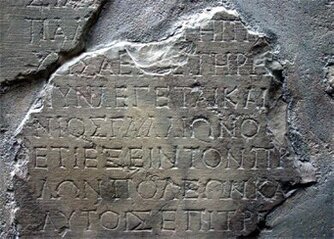
Over the past century, discoveries from across Israel, Greece, Turkey, Egypt, and the wider Roman world have repeatedly illuminated the historical setting of the New Testament. Archaeological finds such as the inscription of Pontius Pilate, the Gallio Inscription, and numerous excavated cities mentioned in the Book of Acts have confirmed that the writers were familiar with the people, places, and political structures they described. [en.wikipedia.org], [uasvbible.org], [en.wikipedia.org]
This does not automatically prove every theological claim of Christianity. Archaeology cannot prove miracles, answer questions of faith, or determine whether Jesus was the Son of God. What it can do is help answer an important preliminary question:
Were the New Testament writers reliable historians?
For many people, the evidence is surprising. Time and again, details once questioned by sceptics have been supported by inscriptions, coins, ancient manuscripts, and archaeological discoveries. The New Testament continues to stand up to historical investigation in a way few ancient documents can.
These web pages explores the evidence of men mentioned in the Testament
- Archaeological discoveries that confirm New Testament people and places.
- Ancient inscriptions that verify Roman governors, rulers, and officials.
- How archaeology helps establish the historical setting of the Gospels and Acts.
- Why many historians, including non-believing scholars, regard the New Testament as an important source for first-century history.
You do not need to be a Christian to examine the evidence.
You only need a willingness to ask questions, follow the facts wherever they lead, and consider whether the New Testament deserves a place among the most historically credible documents of the ancient world.
The Christian faith is built upon events claimed to have occurred in real history. If those events happened, they matter. If they did not, they can be investigated. Either way, the evidence is worth examining.
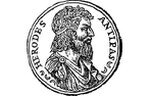
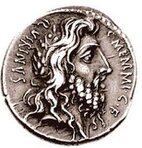
Heres some of the people recorded in the Bible who were non believers